
Find a Specific Course
-

 This quick course covers the dangers of working with silica, symptoms of silicosis and how to protect yourself from the dangers of working with silica.
 -
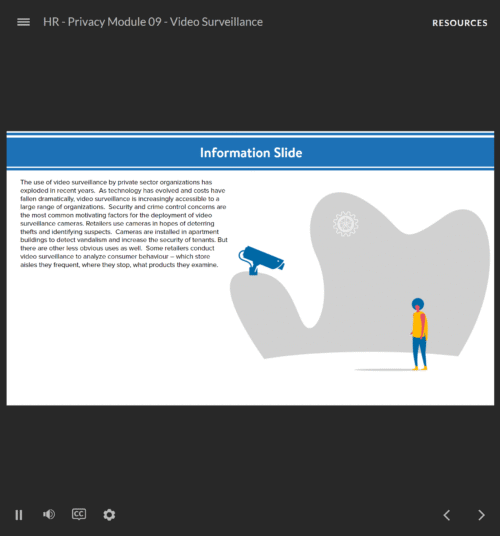
 The use of video surveillance has increased dramatically in recent years, but it doesn't come without some privacy concerns. Privacy Part 9 covers some questions to ask when considering the use of a video surveillance system at your organizations, as well as some FAQs about video surveillance.
 -
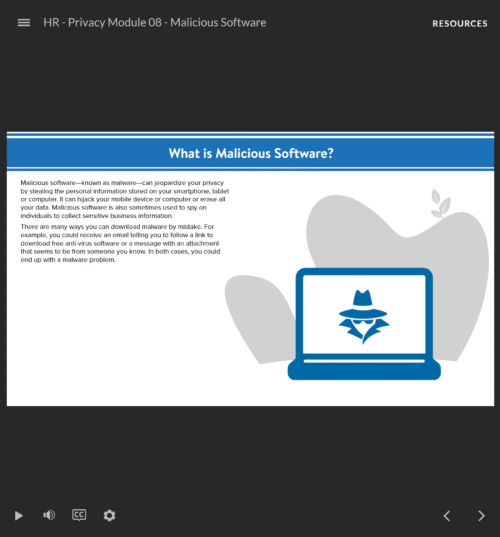
 Privacy Part 8 outlines the different types of malware, including ransomware, keyloggers, trojans, and more, discusses how they work, how best to avoid them, and what to do if your system is attacked by malware.
 -
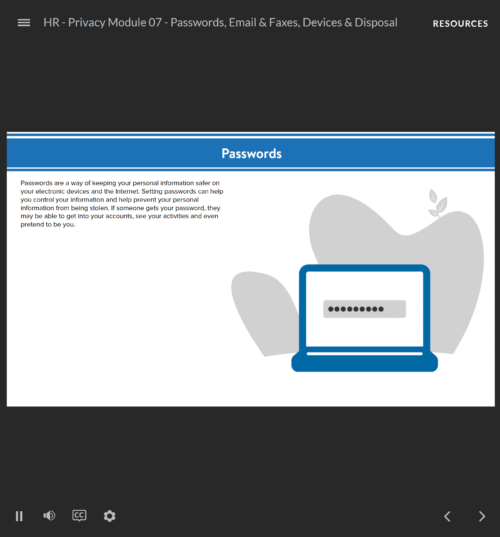
 Privacy Part 07 covers the importance of keeping strong passwords to keep your information safe including best practices for password setting, managing your passwords, email and fax tips, mobile devices and use of third parties.
 -
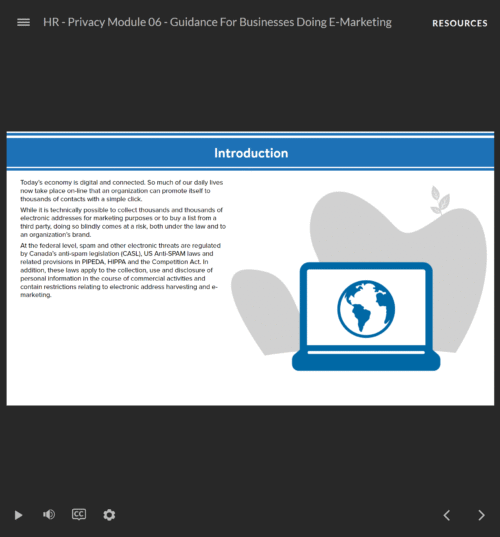
 Privacy part 6 covers best practices for e-marketing including what can and can't be done under the law and other best practices.
 -
 Privacy Part 5 Covers important questions about meaningful consent including is consent required for information that is accessible to the public, when is consent valid, when is consent not required, who is responsible for consent when processing of information is outsourced, when privacy policies should be updated and organizations obligations to approaching consent.
 -
 Privacy Part 4 covers Dealing with a Breach including what a breach of security is, the harm of a breach, what a breach report should contain and notifications to individuals.
 -
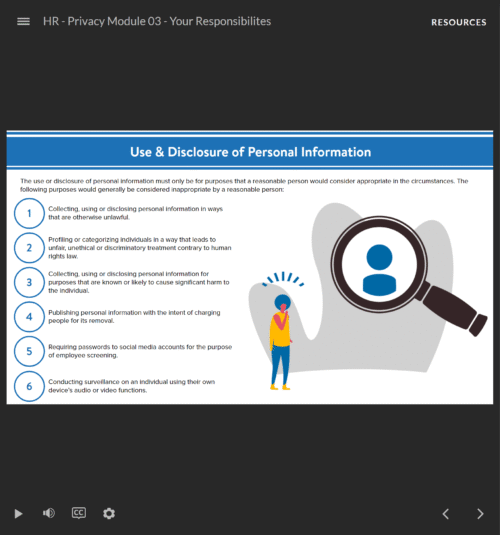
 Privacy part 3 covers your responsibilities when it comes to privacy including the 10 Principles of Privacy for individuals including accountability, identifying purposes, consent, limiting collection, limiting use, disclosure, and retention, accuracy, safeguards, openness, individual access and challenging compliance.
 -
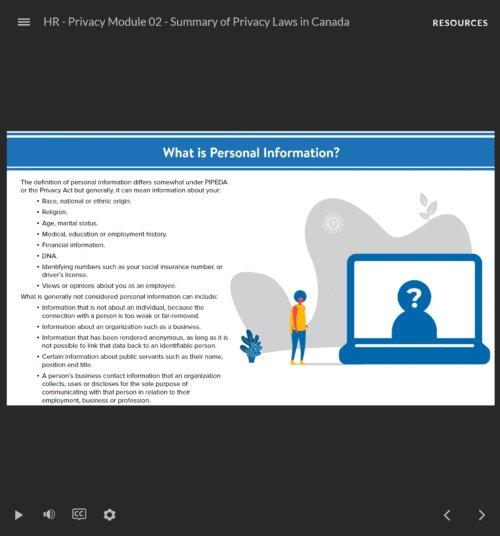
 The Canadian version of Privacy Part 2 outlines Canada's two main pieces of privacy legislation, how they define "personal information" and who they apply to. Additionally, provincial and sector-specific privacy laws are summarized.
 -

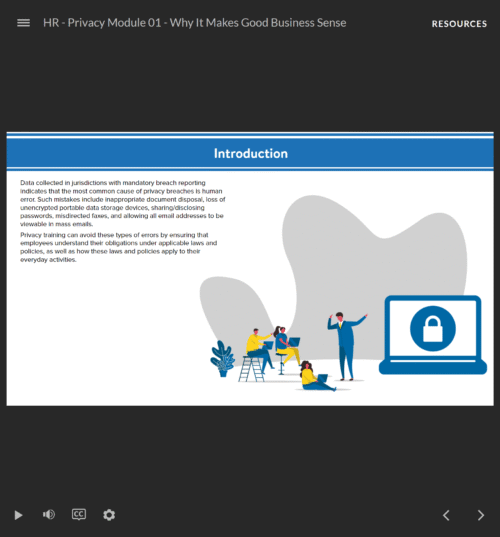
 Privacy Part 1 covers why privacy training is important and necessary. It covers the 10 principles of privacy as well as the expectation of privacy at work and how to have a clear policy on privacy.
 -
 Remove any doubt you have regarding privacy with our Privacy eLearning Package. The 10 fundamental building blocks of this course cover everything from privacy training for your employees, valid/meaningful consent to security and malware, and everything in between. Now more than ever before we live and work digitally, making our online private and work activities intersect in constant and unforeseen ways.
 -

 This quick course covers the importance of teamwork and culture in the workplace including the dangers of not working as a team and the benefits of teamwork.
 -
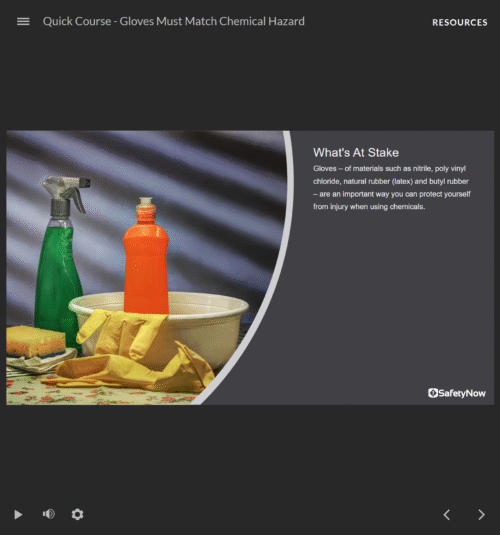
 This course covers the dangers gloves are designed to safeguard you from and the importance of matching the right glove to the hazard of work.
 -

 This quick course covers the importance of reporting incidents like close calls or broken/damaged equipment. It also covers tips on fixing or reporting hazards and your obligation to report.
 -
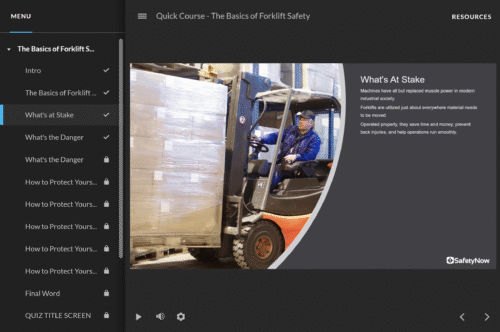
 This quick course covers hazards of working with forklifts - both as drivers and pedestrians and how to protect yourself from these dangers whether you are operating the forklift or working around it.
 -

 This quick course covers the importance of taking safety seriously off the job including how to protect yourself when you're not at work and tips on working safely in places like your garage or in your vehicle or during recreational activities.
 -
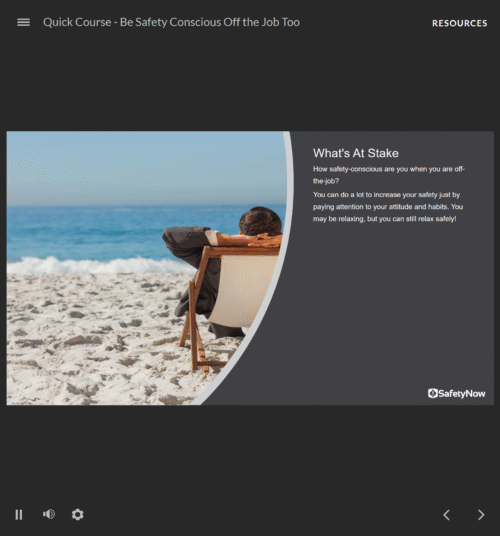
 This quick course covers the importance of taking safety seriously off the job including how to protect yourself when you're not at work and tips on working safely in places like your garage or in your vehicle or during recreational activities.
 -
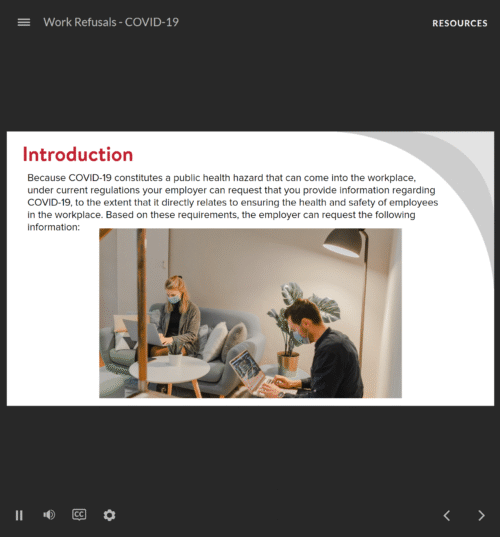
 This course covers your responsibilities when it comes to refusing work due to COVID-19 infection. It covers legal obligations and other information including information on encounters between the employee and employer and other personal circumstances that may be involved in the refusal.
 -
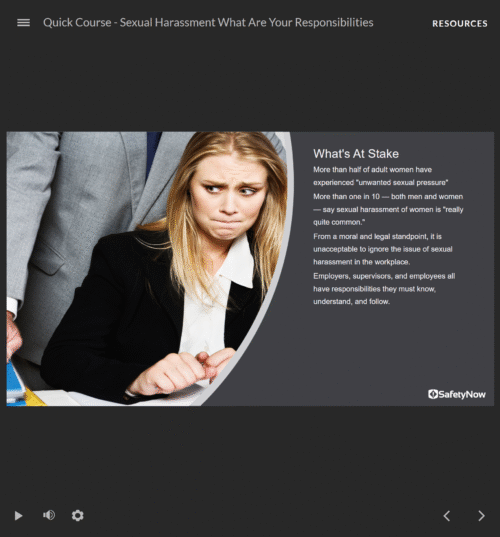
 This quick course covers the important role supervisors play when it comes to the issue of sexual harassment in the workplace. It covers supervisor responsibilities and steps to take if approached with a complaint and employee responsibilities when it comes to sexual harassment responsibilities.
 -
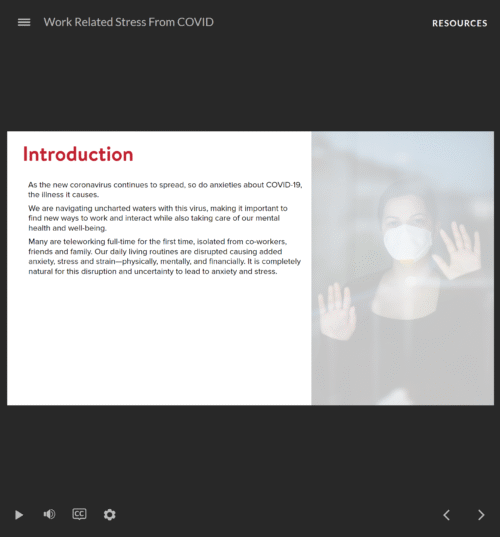
 This course covers how to deal with work related stress caused by the COVID-19 pandemic including practical tips on taking care of our health and well being.
 -
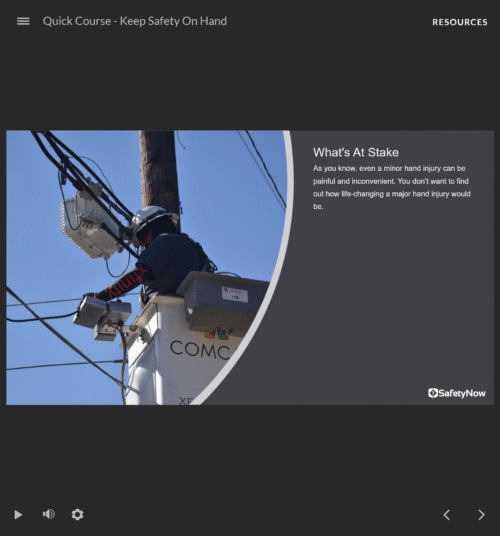
 Even a minor hand injury can be painful and inconvenient. You don’t want to find out how life-changing a major hand injury would be. This quick course covers the danger of hand injuries and how to protect yourself from common hand injuries.
 -

 Horseplay is rough play, practical jokes and other physical humor which can endanger workers. This quick course covers the dangers of horseplay and how to protect yourself from these dangerous actions including thinking of the victim, discouragement, training and reporting.
 -
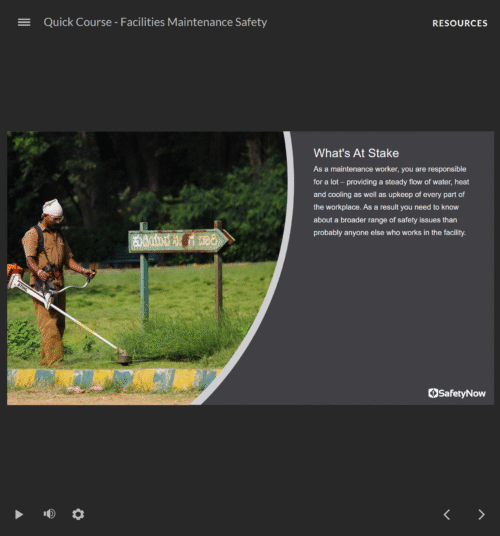
 This quick courses covers the hazards associated with facilities maintenance and how to protect yourself including gear that protects you, hazard communication and more.
 -
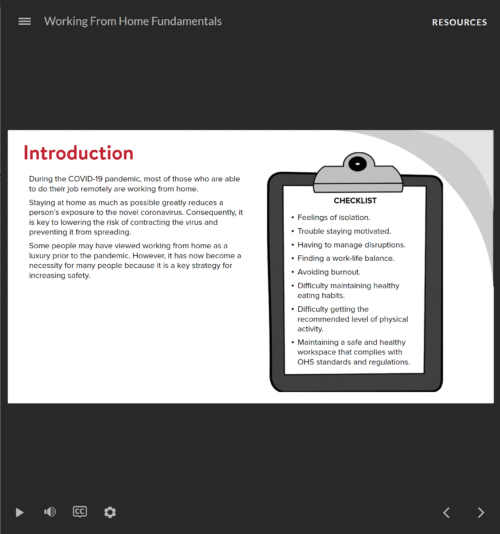
 Some people may have viewed working from home as a luxury prior to the pandemic. However, it has now become a necessity for many people because it is a key strategy for increasing safety. This course covers the fundamentals of working from home including what it means to work from home, potential advantages, potential issues, safety or security issues and other tips on remote work.
 -
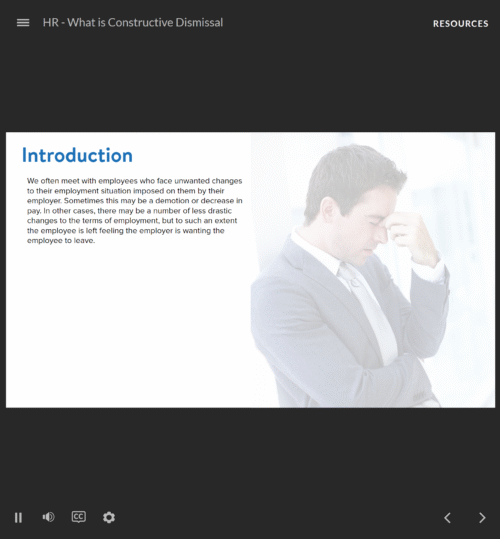
 We often meet with employees who face unwanted changes to their employment situation imposed on them by their employer. Sometimes this may be a demotion or decrease in pay. In other cases, there may be a number of less drastic changes to the terms of employment, but to such an extent the employee is left feeling the employer is wanting the employee to leave.
 -

 La verdadera inclusión sólo puede existir cuando las personas en el lugar de trabajo se sienten libres de ser ellas mismas. Las opiniones, habilidades y contribuciones de todos no sólo deben ser toleradas, sino también valoradas para que todos los empleados tengan la oportunidad de maximizar su potencial. Este curso tratará de la importancia de la diversidad en su lugar de trabajo.
 -

 Valley fever is a disease caused by a fungus that gets into your body through your lungs. This course will review what valley fever is, where it occurs, symptoms and treatment.
 -
 This course covers why time management is important including benefits of time management, mistakes to avoid and how to improve your time management so you can get essential tasks done and produce better work.
 -

 This course covers the basics of progressive discipline including why it may be a better alternative to immediate terminations, important considerations for a progressive discipline policy and common mistakes when it comes to progressive discipline.
 -

 This course covers the basics of progressive discipline including why it may be a better alternative to immediate terminations, important considerations for a progressive discipline policy and common mistakes when it comes to progressive discipline.
 -

 An injury-free office helps your workplace run smoothly. This quick course will cover some common hazards in office settings and how to avoid them.
 -
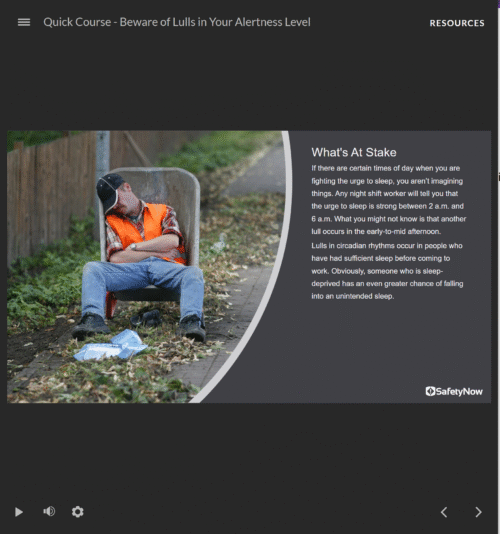
 This quick course covers the hazards of lulls in your alertness levels including the danger of microsleep and how to protect yourself and stay alert during your work shift.
 -
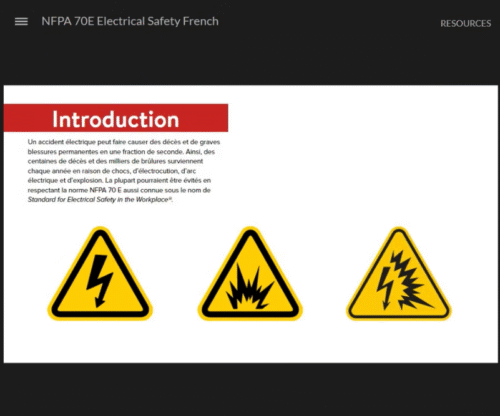
 Vous apprendrez lors de cette formation la différence entre un arc électrique et une décharge électrique. Les dangers associés aux décharges électriques et aux arcs électriques. Les limites et autres précautions à prévoir lorsque vous travaillez près des systèmes électriques à découvert. La base des programmes de sécurité en matière d’électricité.
 -
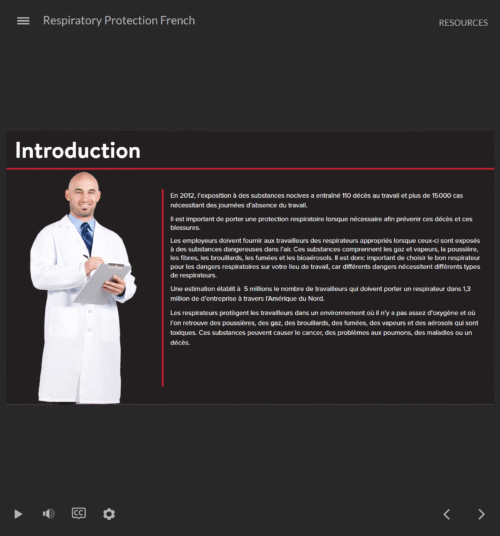
 À la fin de cette leçon, les employés connaîtront les différents types de risques respiratoires et leurs effets possibles sur la santé, les façons pour minimiser ou éliminer les risques, les compétences nécessaires pour l’utilisation d’appareil respiratoire et leurs différents types ainsi que la façon de sélectionner l’appareil approprié et la façon de les entretenir.
 -
 The course covers workplace eye hazards, PPE used to protect against them, and proper fit and care of PPE.
 -
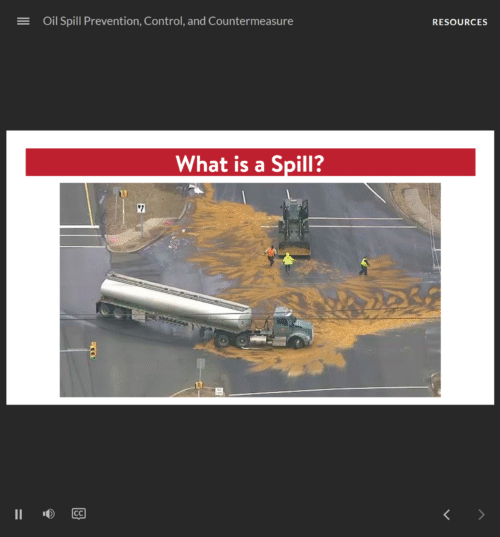
 This course covers the harmful effects of spilled oil and regulations for oil pollution prevention. The purpose and requirements of a SPCC Plan, procedures to prevent spills, and measures for stopping a spill from reaching the environment.
Thousands of Courses Conveniently Packaged
Sure you can move forward a la carte and buy individual courses, but our experts have built bundled packages to meet your industry specific needs.

ADDITIONAL PACKAGES
Bear Essentials $39.95
Canadian Heavy Truck Weight & Dimensions $24.95
CMVs – Safe Driving Behavior for Commercial Motor Vehicles $24.15
H2S Awareness Online Training $49.95
Joint Health & Safety Committees & Representative Online $124.95
Managing Safety Self-Awareness $39.95
Safety Orientation 101 $99.95
SPECIALTY/FRENCH: Transport des Marchandises Dangereuses $36.00
Construction, General & New York City
Research shows that 70% of development happens on the job. At SafetyNow we work hard to make sure you have the engaging training to upskill your employees.
Our entire reason for getting up in the morning is to help as many businesses & organizations as we can to empower their employees & make sure they are safe, healthy, & productive.
Our expansive Employee & Manager Library includes training courses to train new employees, existing employees, new managers, experienced managers, and members of the HR & Executive teams.
Courses cover everything from benefits & leave, compensation, discrimination, health & safety, HR management, performance & termination, and employee communication. You can get access to the entire collection of 83 elearning courses for the starting price of $3.85/learner/month including access to our award-winning Learning Management Platform.
List of Courses
- 8 Steps to Effective One-on-Ones
- 8 Steps to Effective Team Meetings
- Coaching Skills: Captain
- Coaching Skills: Contributor
- Coaching Skills: Introduction
- Coaching Skills: Key Player
- Effective Performance Reviews: Effective Performance Reviews for Managers
- Effective Performance Reviews: Handling a Bad Performance Review
- Effective Performance Reviews: Preparing for Your Review
- Effective Performance Reviews: Self Assessments
- Going from Coworker to Boss
- Managing Different Generations
- How to Be an Ally
- Adopting Inclusive Behaviours at Work
- Working With Different Generations: Introduction to the Working Generations
- Working With Different Generations: Working Together Across Generations
- Working With Different Generations: Working With Baby Boomers
- Working With Different Generations: Working With Gen X
- Working With Different Generations: Working With Gen Z
- Working With Different Generations: Working With Millennials
- Anti-Harassment: 01. Anti-Harassment for Everyone
- Anti-Harassment: 02. Anti-Harassment for Managers
- Anti-Harassment: 03. Writing and Communicating an Anti-Harassment Policy
- Anti-Harassment: 04. Investigating Complaints
- Anti-Harassment: 05. History of Sexual Harassment
- Avoiding Discrimination: 5 Keys
- Diversifying Your Leadership Team
- Employee Recognition
- Fix That Bad Attitude
- Managing for Accountability
- Managing for Engagement: Creating Engagement
- Managing for Engagement: Engagement Matters
- Managing Interns
- Managing People Offsite
- Managing the Grapevine
- Managing Time Versus Energy
- Managing Up: The Art of Managing Your Manager
- Microaggressions
- Understanding Harassment: 01. Introduction to Understanding Harassment
- Understanding Harassment: 02. Understanding Offenders
- Understanding Harassment: 03. Understanding Targets
- Understanding Harassment: 04. Bystander Training
- Understanding Harassment: 05. Warning Signs
- Understanding Harassment: 06. Healthy Culture
- Understanding Harassment: 07. Understanding Harassment in Review
- Analyzing Employee Performance: Can-Do, Will-Do: Actions
- Analyzing Employee Performance: Can-Do, Will-Do: Introduction
- Analyzing Employee Performance: Can-Do, Will-Do: Questions and Tips
- Anti-Racism for Leaders: Allyship
- Anti-Racism for Leaders: Creating and Implementing Policy
- Anti-Racism for Leaders: Diversity-Focused Recruitment
- Anti-Racism for Leaders: Evaluating Your Organization
- Anti-Racism for Leaders: Maintaining Momentum for Leaders
- Anti-Racism for Leaders: Mitigating Bias
- Anti-Racism: Calling Out and Calling In
- Anti-Racism: Colorblindness Doesn’t Work
- Anti-Racism: Learning to Listen and Listening to Learn
- Anti-Racism: Maintaining Momentum
- Anti-Racism: The Anti-Racism Continuum
- Ethics for Managers
- Inheriting Underperformers
- Introverts and Extroverts: Introduction to Introverts and Extroverts
- Introverts and Extroverts: Managing Extroverts
- Introverts and Extroverts: Managing Introverts
- Leadership of a Diverse Group
- Mistakes Leaders Make: Six Wrong Ways to Manage
- Motivating Won’t Do’s
- Psychological Safety for Employees
- Psychological Safety for Managers
- Staying Positive
- Successful Delegation
- Tokenism
- Unconscious Bias: 01. What is Unconscious Bias?
- Unconscious Bias: 02. Types of Unconscious Bias
- Unconscious Bias: 03. Overcoming Unconscious Bias
- Working Well with Everyone: 01. What is Diversity?
- Working Well with Everyone: 02. The Diversity Continuum
- Working Well with Everyone: 03. The Mistake of Stereotyping
- Working Well with Everyone: 04. The Power of Inclusion
- Working Well with Everyone: 05. Diversity = Greatness
- Career Change
- Creating a Work Plan
- Isms: Avoiding Items in the Workplace
- Isms: Exploring Isms in the Workplace
- Isms: Overcoming Isms in the Workplace
- Mistakes Leaders Make: Impedership
- Neurodiversity: Misconceptions About Neurodiversity
- Neurodiversity: Working With Neurodiverse People
- Privilege: Privilege Scenarios
- Privilege: Using Your Privilege
- Privilege: What is Privilege?
- Supervising a Pronoid
- You Get What You Manage – The Pygmalion Effect
- Customer Service Basics
- Productivity Through Praise
- Professional Boundaries: Confidentiality
- Professional Boundaries: Conflicts of Interest
- Professional Boundaries: Nepotism and Favoritism
- Professional Boundaries: Office Romances
- Rethinking Brainstorming
- Riding Along with Sales Reps
- Running a Sales Meeting
- S.C.A.M.P.E.R.
- Territory Management: Managing a New Territory
- Privacy Course Module – HIPAA (US)
- Mental Health Awareness and Support in the Workplace
SafetyNow offers all 31 of the Essential full length courses in French.
SafetyNow currently offers over 250 Spanish safety training courses, and is adding over 20 more each month.

ERGO Inc.’s elearning suite is a fully narrated, engaging, and dynamic suite of 5 core office ergonomic modules. Your employees will learn to correctly set themselves up at a computer workstation and how to use proper body mechanics when performing work functions. Becoming more knowledgeable with their workstation and work tasks will allow employees to be more productive, efficient and safe. It has been designed to deliver critical ergonomic and injury prevention information for office staff anywhere, at anytime.
E-learning provides:
- Animated graphics, audio narration, motion and a flexible format
- Available 24/7 self-paced learning
ERGO Inc.’s Office Ergonomic E-learning modules include:
- Desktop and laptop ergonomic set up and stretching for computer users
- Proper selection of an office chair & 7 steps to properly adjust an office chair
- ERGO Tips for mousing, laptop use, keying and safe handling
- The ergonomics of sit/stand workstations
- How to implement the RIGHT kind of stretching and wellness procedures for ergonomic health
eLearning Administrative Features
You can buy a single module, or all 5 as a suite.
ERGO Inc.’s E-learning solutions can be delivered through SafetyNow or your own LMS. Volume pricing options are available. All courses are guaranteed to work on any LMS and any device.
Download the 2021/2022 ERGO Consulting Services Brochure
Download a Laptop Ergonomics Toolkit Card
Download a Mental Health & Ergonomics Toolkit Card
Utah Food Handlers Training $35.34
ANSI-Accredited Food Handler Training $11.10
Ohio Person-in-Charge Certification in Food Protection $17.99
Florida Food Safety First $13.89
California Food Handler – San Diego County Specific Course $13.89
Texas Food Manager Certification $48.61
Ohio Manager Certification in Food Protection $118.05
Food Safety Manager Principles Training $118.05
ANSI Food Manager Certification Exam with Online Proctor $89.25
Washington D.C. On-Premises Alcohol Awareness Training $34.72
Vermont Alcohol Server Awareness Program (ASAP) $34.72
Washington D.C. Off-Premises Alcohol Awareness Training $34.72
South Carolina Alcohol Seller-Server Training (On-Premises) $20.84
Indiana Alcohol Server Training (On-Premises) $27.76
Indiana Alcohol Server Training (Off-Premises) $27.76
Wyoming Alcohol Seller-Server Training $34.72
Vermont Alcohol Server Awareness Program (ASAP) Off-Premises $34.72
Illinois BASSET Training $20.82
Tobacco Seller Training $13.81
Virginia Alcohol Seller-Server Training $18.05
South Carolina Alcohol Seller-Server Training (Off-Premises) $20.84
North Carolina Responsible Alcohol Seller-Server Training $20.82
Maine Alcohol Seller-Server Training (On-Premises) $13.87
Alcohol Seller-Server Training (On-Premises) $10.41
Alcohol Seller-Server Training (Off-Premises) $10.41
Tennessee Responsible Wine Vendor $20.84
Oregon Alcohol Server Education $20.84
Tennessee Responsible Beer Vendor $16.66
Michigan Alcohol Seller-Server Training $27.76
Oklahoma Alcohol Seller-Server Training $15.20
TABC Certification Training – Alcohol Seller-Server $15.34
Arizona Title 4 Management Training (Off-Premises) $48.61
Arizona Title 4 Management Training (On-Premises) $48.61
Arizona Title 4 Basic Training (Off-Premises) $22.15
Arizona Title 4 Basic Training (On-Premises) $29.16
Utah E.A.S.Y Off-Premises Alcohol Sales Training $23.61
Bowling Green Kentucky Alcohol Seller-Server Training $34.72
Lexington-Fayette Kentucky Alcohol Seller-Server Training $34.72
New York ATAP Certification (Off-Premises) $27.76
New York ATAP Certification (On-Premises) $27.76
Utah On-Premise Alcohol Seller-Server Training $34.16
Wisconsin Responsible Beverage Server Training $20.76
California Responsible Beverage Server Training (RBS) $64.14
TABC SELLER SERVER TRAINING $64.14
