
Find a Specific Course
-

 This lesson informs you of the liabilities and consequences associated with sexual harassment and other types of harassment in the workplace. Additionally, it covers how to respond when harassment occurs, the aspects of a harassment investigation, the dangers of retaliation, and the steps both employees and management must take in order to prevent sexual or other types of harassment.
-

 In management, you have to have a plan for addressing sexual harassment in the workplace, and you should provide training on at least an annual basis, because sexual harassment is, first, a crime, but it is also an expensive one that threatens the viability of your operation. Sexual harassment incidents trouble the work environment by establishing a negative environment that can ruin working relationships, lower productivity, result in costly administrative actions and even more expensive litigation. You need protect your employees from sexual harassment and educate them on the explicit policy, encouraging them to report violations freely.
-

 This lesson teaches how to report an incident of sexual harassment and how to empower victims and witnesses to report the incident through the reassurance that they are not alone, and that they are protected by law from retaliation by their employer or the harasser.
-

 Operating aerial lifts safely requires preventive maintenance and conditioning of machinery, as well as a lot of considerations before even turning on the key, because the majority of aerial lift accidents happen because of a lack of training or inattention.
-
 You don’t need numbers to know that radio communication saves lives. Think of how vital radio communication is to the ship that’s sending out a distress call, or for the airplane experiencing technical issues, or for the first responders to a natural disaster. Or, what about people working in isolation in high-risk work environments, like corrections personnel, or a team of backcountry firefighters? A functional radio communications system can mean the difference between life and death. When time is of the essence and someone needs immediate medical attention, a radio carries the promise of a better outcome, so it is important to understand how they work and what they can and cannot do, and what rules govern the use of these systems.
-

 Process safety management increases safety for the workforce. Now, small businesses with limited resources might use other ways to decrease the risks associated with hazardous chemicals in the workplace, but development of a process safety management program is the operating standard. An effective process safety management program requires employers to compile a written process information resource. This information enables workers to identify and understand the hazards posed by processes that involve highly hazardous chemicals.
-

 In this course, managers and employers will learn about the signs of workplace harassment, how to prevent incidents before they occur, and what your obligations are.
-
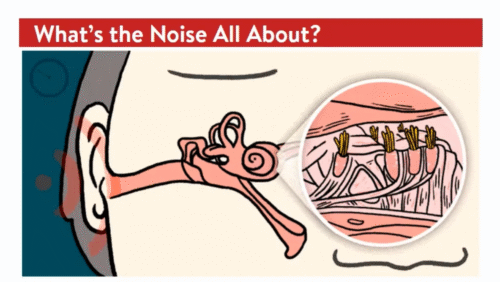
 This course will cover how hearing loss can occur, the different types hearing protection and recognize and use the proper hearing protection.
-
 If you are at risk for head injury at your workplace, you should wear the appropriate head protection. This course covers workplace head hazards, types of PPE for the head, and proper fit and care for head protection.
-
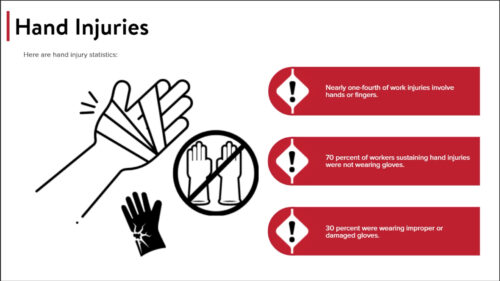
 Can you put a price tag on the use of your hands? Some people don't realize the important of their hands until they aren't able to be used any longer. Hand injuries send a million workers to ERs each year, and hand injuries are the No. 2 leading cause of work-related injury and the most preventable through proper personal protective equipment (PPE).
-

 This course will cover the potential hazards in your workplace, what footwear to wear, the capabilities and limitations of footwear, how to check comfort, fit and support of footwear and how to clean, store and inspect your footwear.
-
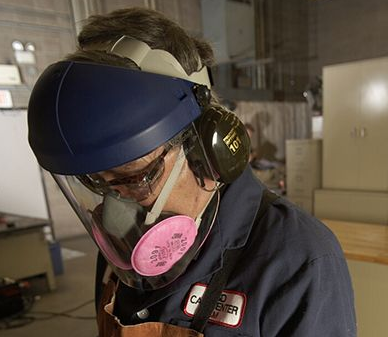
 Approximately 770 workers suffer face injuries on a yearly basis; most don't wear proper personal protective equipment (PPE) for face protection Proper personal protective equipment (PPE) is essential to any work environment for eye and face protection. The goal of this course is to show how to handle face and eye protection properly using personal protective equipment (PPE).
-
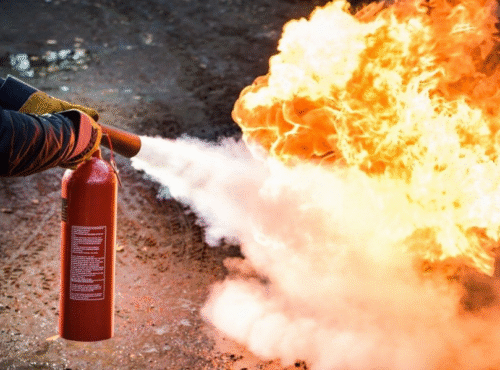
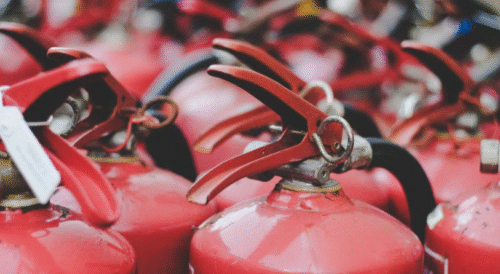 Fire extinguishers are one of the most reliable ways to put out fires in the workplace. Fire extinguishers are not a requirement, but if employers choose to provide them they must train workers in general fire extinguisher use to comply with OSHA standards. OSHA states that if employers expect workers to use the fire extinguishers themselves, hands-on training must be provided.
-

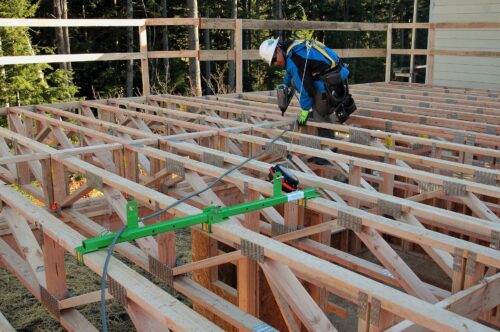 It is important to understand how personal fall arrest systems work and what behaviors are required to use them safely. It is of course good practice to visually inspect these systems and physically test them prior to use.
-
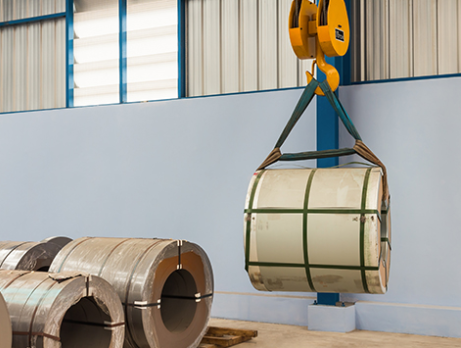
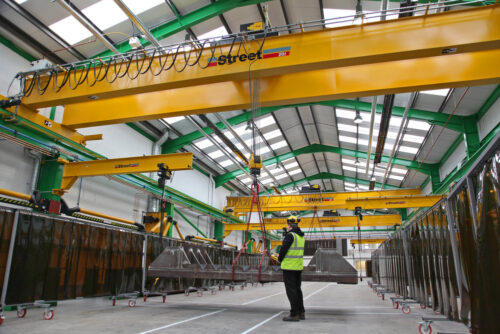 This course covers overhead crane hazards, safety devices, pre-op inspection and testing, and procedures for load rigging and lifting. As well as, safe work practices for unattended equipment, working around others, and disconnecting power to equipment.
-

 Criticality safety is about managing materials so they stay subcritical—safe, stable, and harmless. This course will talk about - what it means, why it matters and how you play a role in preventing accidents.
-
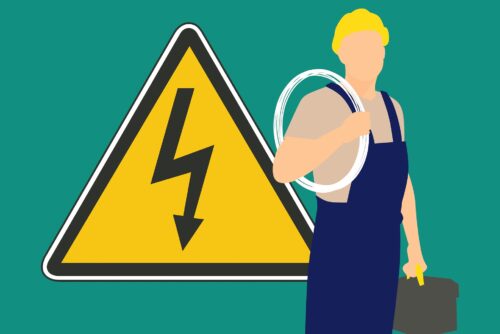 The purpose of the NFPA standard 70E is to provide a standard for safety-related work practices for the construction, maintenance, operation and demolition of electrical systems in the workplace. This Overview covers awareness-level information for workers who have jobs or assignments that bring them into contact with electrical hazards, such as arc flash and electric shock. Completing this lesson does not designate an employee as an electrically-qualified worker.
-
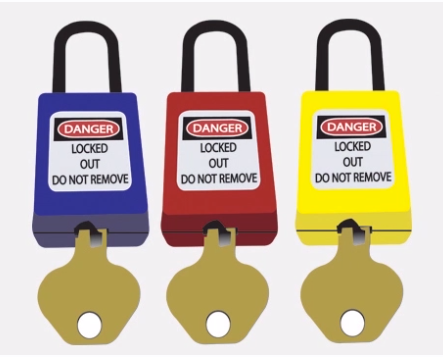
 To protect you from the serious hazards posed by the unexpected start-up or operation of equipment during repair or maintenance, the Occupational Safety & Health Administration (OSHA) has established a Control of Hazardous Energy standard. It is commonly referred to as the lockout/tagout (LOTO), or energy isolation standard. This standard requires the application of markings and barriers that prevent unauthorized persons from energizing and operating equipment.Energy in any form becomes hazardous when it builds to a certain level or is released inadvertently or unexpectedly. Lockout/tagout refers to specific practices and procedures that safeguard employees from the unexpected startup of machinery and equipment, or the release of hazardous energy, during service or maintenance activities.
-
 The purpose of the NFPA standard 70E is to provide a standard for safety-related work practices for the construction, maintenance, operation and demolition of electrical systems in the workplace. This Overview covers awareness-level information for workers who have jobs or assignments that bring them into contact with electrical hazards, such as arc flash and electric shock. Completing this lesson does not designate an employee as an electrically-qualified worker.
-

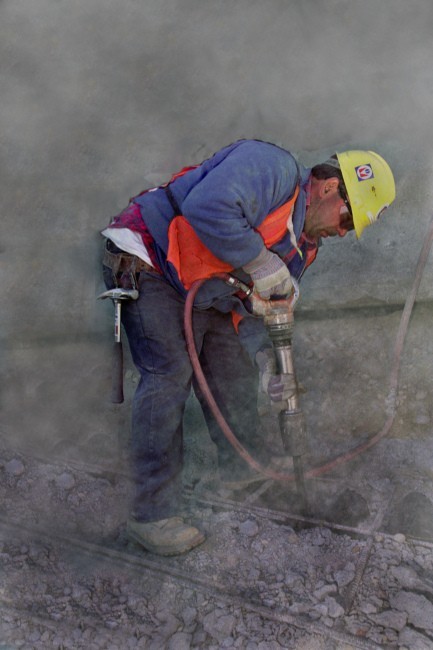 The Occupational Safety and Health Administration (OSHA) has issued a final rule to curb lung cancer, silicosis, chronic obstructive pulmonary disease and kidney disease in America's workers by limiting their exposure to respirable crystalline silica. The rule is comprised of two standards, one for Construction and one for General Industry and Maritime. This lesson is designed to improve the safety of workers in environments where silica exposure hazards exist by increasing employee awareness of this hazard and by demonstrating how the hazard can be recognized and addressed in the workplace.
-

 Poor IAQ doesn’t just make people uncomfortable—it can make them sick, hurt productivity, and even cause long-term health problems. This course will cover what it is, what affects it, and how to make it better.
-
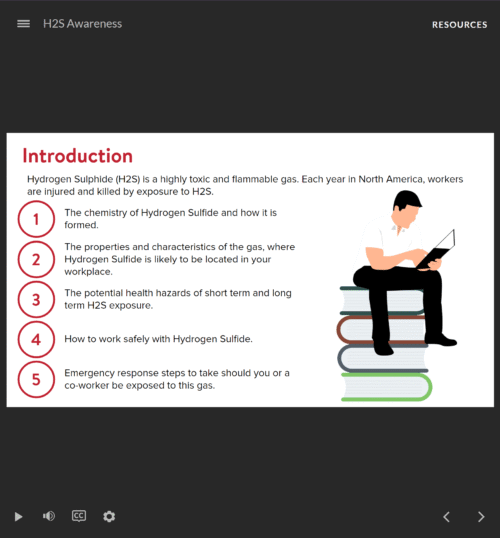
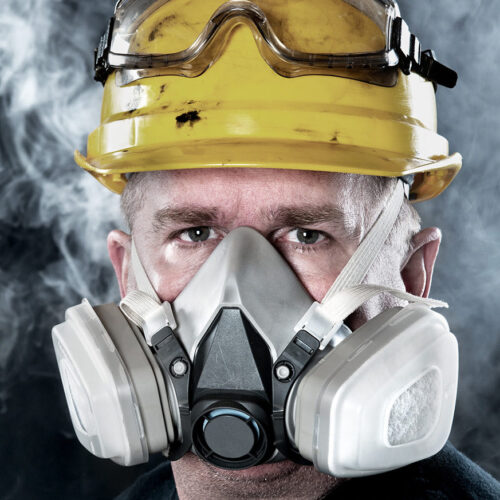 In this course you’ll learn about the chemistry of Hydrogen Sulfide and how it is formed, the properties and characteristics of the gas, where Hydrogen Sulfide is likely to be located in your workplace, the potential health hazards of short term and long term H2S exposure, how to work safely with Hydrogen Sulfide and emergency response steps to take should you or a co-worker be exposed to this gas.
-
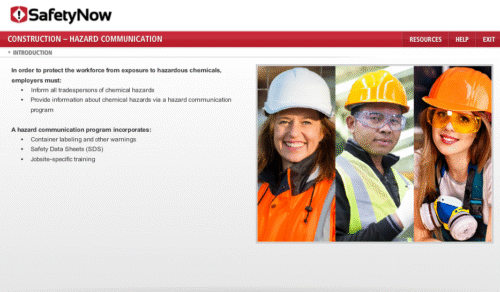
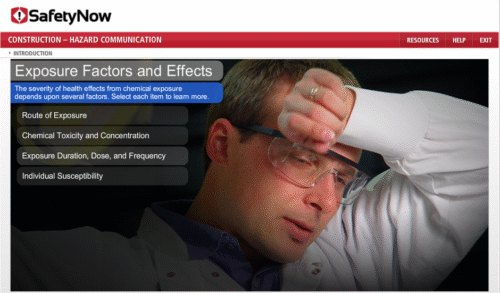 Thousands of workers are harmed each year from chemical exposure. This course helps employees explain the purpose and of the Hazard Communication Standard, identify chemical hazards, and read and understand SDS’s, chemical labels and symbols.
-
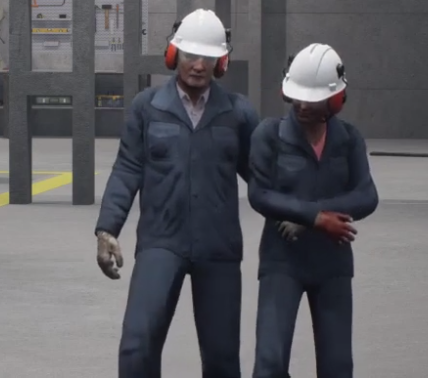 Occupational hand injuries account for more than one million emergency room visits per year. The first step in preventing hand injuries is to know the hazards involved in your job and how to avoid them.
-

 Power tool injuries account for as many as 400,000 emergency room visits each year. The use of tools enables us to work much more productively, but hand and power tools can expose workers to flying objects like sparks and metal and wood splinters, electrical shock, and sharp blades and loud noises.
-

 According to the Environmental Protection Agency (EPA), “Hazardous waste is waste that is dangerous or potentially harmful to our health or the environment. Hazardous wastes can be liquids, solids, gases, or sludges. They can be discarded commercial products, like cleaning fluids or pesticides, or the by-products of manufacturing processes.” There is a growing awareness of the dangerous side effects of hazardous waste contamination. Years ago, many industrial plants discharged heavy metals and unstable organic compounds directly into streams or injected them into the earth’s subsurface through wells, causing illness in populations with close proximity to these toxic sites. This lesson teaches the industrial sources of land, air, and water pollution, the health dangers that environmental pollutants present, and the types of actions that industrial facility workers must complete in order to control industrial pollutants and respond to environmental incidents.
-
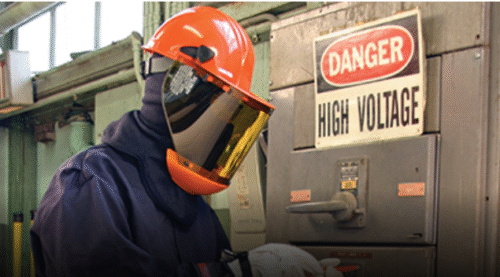
 In this course, employees will learn how to safely work with and around electricity in the workplace. Additionally, they learn special requirements for dealing with arc flash.
-

 This course enables employees to reduce workplace accidents involving electricity by learning to identify electrical hazards, take proper control measures and follow safe work practices, and response actions in the event of shock or fire.
-
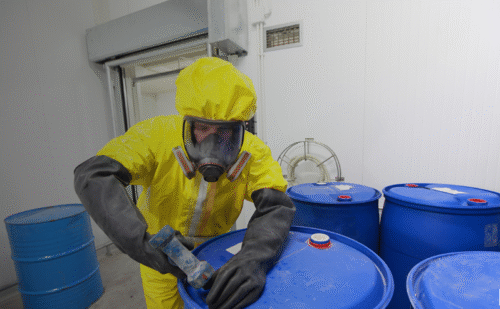
 DOT Packaging Hazardous Materials is part of our DOT Transportation library. It covers the steps for packaging a hazardous material, how to select appropriate hazardous materials packaging and how to determine and prepare required hazardous materials identifiers, including labels, markings, placards, and shipping papers.
-
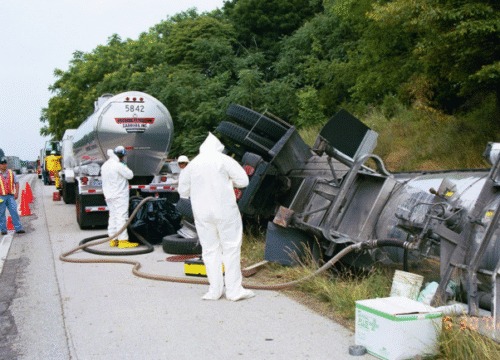
 This is Lesson 5 of a five-lesson hazardous materials transportation awareness curriculum. The purpose of the lesson is to provide individuals who are involved with the transportation of hazardous materials with an awareness-level understanding of incident response and transport security.
-
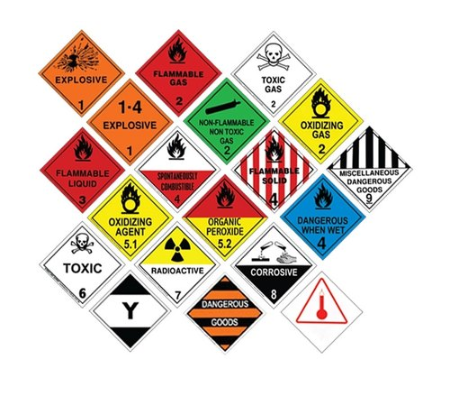
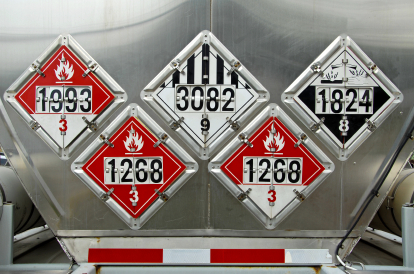 When on the road, job, and everywhere in-between, identifying hazardous materials and knowing exactly how to handle them is one of the most important tasks a worker must know. Because of the importance of identifying these hazardous materials properly, the U.S. Department of Transportation (DOT) requires all workers that handle these materials to take safety training in order to help protect themselves as well as others around them.
-
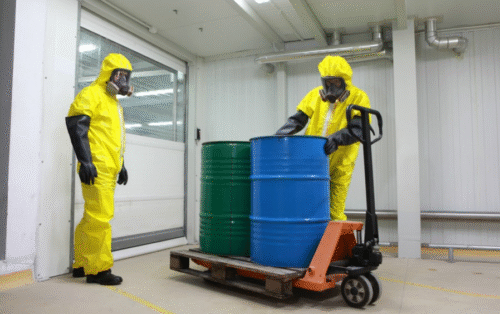 DOT Hazardous Materials General Awareness consists of five lessons, The goal of this library is to offer the required DOT awareness-level lessons that help save lives in high risk work environments, particularly those that involve transporting hazardous materials. The first lesson is DOT Fundamentals of Hazardous Materials. This lesson provides an overview of the hazardous materials transport process and introduces the learner to the many references used during that process.
-

 Every day in the U.S., 9 people are killed and more than 1,060 people are injured in crashes that are reported to involve a distracted driver. The cause for concern is obvious. Transportation related occupational fatalities are the number one cause of death in the American workforce. The purpose of this lesson is to heighten drivers’ awareness of the dangers of distracted driving and identify ways to stay safe when sharing the road with distracted drivers.
-

 Cardiopulmonary resuscitation (CPR) is a technique used to slow the process of brain death by restarting the heart and getting a person breathing again. Cardiopulmonary Resuscitation (CPR) can provide oxygen to the brain and other vital organs of a person who, by every indication, is dead. Used early and correctly, the technique can buy time for the victim until medical attention can be given.
-
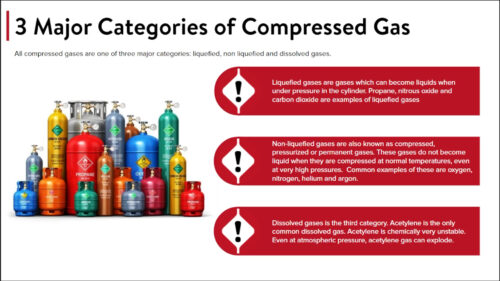
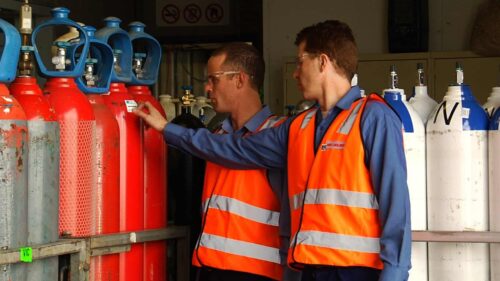 After completion, employees will be able to compressed gas cylinder hazards, recall practices to safely using compressed gas cylinders and their components, and identify safe methods of moving and storing compressed gas cylinders.
-

 Each year in the United States, there are approximately 3,500 people killed and 80,000 others injured in accidents involving Commercial Motor Vehicles (CMVs). Whenever you get the behind the wheel of a Commercial Motor Vehicle (CMV), your first responsibility is to drive safely. Because when a CMV weighing 10,000 pounds or more collides with a car weighing 4,000 pounds, the car almost always loses. So, the responsibility of driving a commercial motor vehicle is enormous. A recent study showed that the majority of crashes are caused by four types of undesirable driver behavior: recognition errors, decision errors, performance errors, and non-performance errors.
Thousands of Courses Conveniently Packaged
Sure you can move forward a la carte and buy individual courses, but our experts have built bundled packages to meet your industry specific needs.

ADDITIONAL PACKAGES
Bear Essentials $39.95
Canadian Heavy Truck Weight & Dimensions $24.95
CMVs – Safe Driving Behavior for Commercial Motor Vehicles $24.15
H2S Awareness Online Training $49.95
Joint Health & Safety Committees & Representative Online $124.95
Managing Safety Self-Awareness $39.95
Safety Orientation 101 $99.95
SPECIALTY/FRENCH: Transport des Marchandises Dangereuses $36.00
Construction, General & New York City
Research shows that 70% of development happens on the job. At SafetyNow we work hard to make sure you have the engaging training to upskill your employees.
Our entire reason for getting up in the morning is to help as many businesses & organizations as we can to empower their employees & make sure they are safe, healthy, & productive.
Our expansive Employee & Manager Library includes training courses to train new employees, existing employees, new managers, experienced managers, and members of the HR & Executive teams.
Courses cover everything from benefits & leave, compensation, discrimination, health & safety, HR management, performance & termination, and employee communication. You can get access to the entire collection of 83 elearning courses for the starting price of $3.85/learner/month including access to our award-winning Learning Management Platform.
List of Courses
- 8 Steps to Effective One-on-Ones
- 8 Steps to Effective Team Meetings
- Coaching Skills: Captain
- Coaching Skills: Contributor
- Coaching Skills: Introduction
- Coaching Skills: Key Player
- Effective Performance Reviews: Effective Performance Reviews for Managers
- Effective Performance Reviews: Handling a Bad Performance Review
- Effective Performance Reviews: Preparing for Your Review
- Effective Performance Reviews: Self Assessments
- Going from Coworker to Boss
- Managing Different Generations
- How to Be an Ally
- Adopting Inclusive Behaviours at Work
- Working With Different Generations: Introduction to the Working Generations
- Working With Different Generations: Working Together Across Generations
- Working With Different Generations: Working With Baby Boomers
- Working With Different Generations: Working With Gen X
- Working With Different Generations: Working With Gen Z
- Working With Different Generations: Working With Millennials
- Anti-Harassment: 01. Anti-Harassment for Everyone
- Anti-Harassment: 02. Anti-Harassment for Managers
- Anti-Harassment: 03. Writing and Communicating an Anti-Harassment Policy
- Anti-Harassment: 04. Investigating Complaints
- Anti-Harassment: 05. History of Sexual Harassment
- Avoiding Discrimination: 5 Keys
- Diversifying Your Leadership Team
- Employee Recognition
- Fix That Bad Attitude
- Managing for Accountability
- Managing for Engagement: Creating Engagement
- Managing for Engagement: Engagement Matters
- Managing Interns
- Managing People Offsite
- Managing the Grapevine
- Managing Time Versus Energy
- Managing Up: The Art of Managing Your Manager
- Microaggressions
- Understanding Harassment: 01. Introduction to Understanding Harassment
- Understanding Harassment: 02. Understanding Offenders
- Understanding Harassment: 03. Understanding Targets
- Understanding Harassment: 04. Bystander Training
- Understanding Harassment: 05. Warning Signs
- Understanding Harassment: 06. Healthy Culture
- Understanding Harassment: 07. Understanding Harassment in Review
- Analyzing Employee Performance: Can-Do, Will-Do: Actions
- Analyzing Employee Performance: Can-Do, Will-Do: Introduction
- Analyzing Employee Performance: Can-Do, Will-Do: Questions and Tips
- Anti-Racism for Leaders: Allyship
- Anti-Racism for Leaders: Creating and Implementing Policy
- Anti-Racism for Leaders: Diversity-Focused Recruitment
- Anti-Racism for Leaders: Evaluating Your Organization
- Anti-Racism for Leaders: Maintaining Momentum for Leaders
- Anti-Racism for Leaders: Mitigating Bias
- Anti-Racism: Calling Out and Calling In
- Anti-Racism: Colorblindness Doesn’t Work
- Anti-Racism: Learning to Listen and Listening to Learn
- Anti-Racism: Maintaining Momentum
- Anti-Racism: The Anti-Racism Continuum
- Ethics for Managers
- Inheriting Underperformers
- Introverts and Extroverts: Introduction to Introverts and Extroverts
- Introverts and Extroverts: Managing Extroverts
- Introverts and Extroverts: Managing Introverts
- Leadership of a Diverse Group
- Mistakes Leaders Make: Six Wrong Ways to Manage
- Motivating Won’t Do’s
- Psychological Safety for Employees
- Psychological Safety for Managers
- Staying Positive
- Successful Delegation
- Tokenism
- Unconscious Bias: 01. What is Unconscious Bias?
- Unconscious Bias: 02. Types of Unconscious Bias
- Unconscious Bias: 03. Overcoming Unconscious Bias
- Working Well with Everyone: 01. What is Diversity?
- Working Well with Everyone: 02. The Diversity Continuum
- Working Well with Everyone: 03. The Mistake of Stereotyping
- Working Well with Everyone: 04. The Power of Inclusion
- Working Well with Everyone: 05. Diversity = Greatness
- Career Change
- Creating a Work Plan
- Isms: Avoiding Items in the Workplace
- Isms: Exploring Isms in the Workplace
- Isms: Overcoming Isms in the Workplace
- Mistakes Leaders Make: Impedership
- Neurodiversity: Misconceptions About Neurodiversity
- Neurodiversity: Working With Neurodiverse People
- Privilege: Privilege Scenarios
- Privilege: Using Your Privilege
- Privilege: What is Privilege?
- Supervising a Pronoid
- You Get What You Manage – The Pygmalion Effect
- Customer Service Basics
- Productivity Through Praise
- Professional Boundaries: Confidentiality
- Professional Boundaries: Conflicts of Interest
- Professional Boundaries: Nepotism and Favoritism
- Professional Boundaries: Office Romances
- Rethinking Brainstorming
- Riding Along with Sales Reps
- Running a Sales Meeting
- S.C.A.M.P.E.R.
- Territory Management: Managing a New Territory
- Privacy Course Module – HIPAA (US)
- Mental Health Awareness and Support in the Workplace
SafetyNow offers all 31 of the Essential full length courses in French.
SafetyNow currently offers over 250 Spanish safety training courses, and is adding over 20 more each month.

ERGO Inc.’s elearning suite is a fully narrated, engaging, and dynamic suite of 5 core office ergonomic modules. Your employees will learn to correctly set themselves up at a computer workstation and how to use proper body mechanics when performing work functions. Becoming more knowledgeable with their workstation and work tasks will allow employees to be more productive, efficient and safe. It has been designed to deliver critical ergonomic and injury prevention information for office staff anywhere, at anytime.
E-learning provides:
- Animated graphics, audio narration, motion and a flexible format
- Available 24/7 self-paced learning
ERGO Inc.’s Office Ergonomic E-learning modules include:
- Desktop and laptop ergonomic set up and stretching for computer users
- Proper selection of an office chair & 7 steps to properly adjust an office chair
- ERGO Tips for mousing, laptop use, keying and safe handling
- The ergonomics of sit/stand workstations
- How to implement the RIGHT kind of stretching and wellness procedures for ergonomic health
eLearning Administrative Features
You can buy a single module, or all 5 as a suite.
ERGO Inc.’s E-learning solutions can be delivered through SafetyNow or your own LMS. Volume pricing options are available. All courses are guaranteed to work on any LMS and any device.
Download the 2021/2022 ERGO Consulting Services Brochure
Download a Laptop Ergonomics Toolkit Card
Download a Mental Health & Ergonomics Toolkit Card
Utah Food Handlers Training $35.34
ANSI-Accredited Food Handler Training $11.10
Ohio Person-in-Charge Certification in Food Protection $17.99
Florida Food Safety First $13.89
California Food Handler – San Diego County Specific Course $13.89
Texas Food Manager Certification $48.61
Ohio Manager Certification in Food Protection $118.05
Food Safety Manager Principles Training $118.05
ANSI Food Manager Certification Exam with Online Proctor $89.25
Washington D.C. On-Premises Alcohol Awareness Training $34.72
Vermont Alcohol Server Awareness Program (ASAP) $34.72
Washington D.C. Off-Premises Alcohol Awareness Training $34.72
South Carolina Alcohol Seller-Server Training (On-Premises) $20.84
Indiana Alcohol Server Training (On-Premises) $27.76
Indiana Alcohol Server Training (Off-Premises) $27.76
Wyoming Alcohol Seller-Server Training $34.72
Vermont Alcohol Server Awareness Program (ASAP) Off-Premises $34.72
Illinois BASSET Training $20.82
Tobacco Seller Training $13.81
Virginia Alcohol Seller-Server Training $18.05
South Carolina Alcohol Seller-Server Training (Off-Premises) $20.84
North Carolina Responsible Alcohol Seller-Server Training $20.82
Maine Alcohol Seller-Server Training (On-Premises) $13.87
Alcohol Seller-Server Training (On-Premises) $10.41
Alcohol Seller-Server Training (Off-Premises) $10.41
Tennessee Responsible Wine Vendor $20.84
Oregon Alcohol Server Education $20.84
Tennessee Responsible Beer Vendor $16.66
Michigan Alcohol Seller-Server Training $27.76
Oklahoma Alcohol Seller-Server Training $15.20
TABC Certification Training – Alcohol Seller-Server $15.34
Arizona Title 4 Management Training (Off-Premises) $48.61
Arizona Title 4 Management Training (On-Premises) $48.61
Arizona Title 4 Basic Training (Off-Premises) $22.15
Arizona Title 4 Basic Training (On-Premises) $29.16
Utah E.A.S.Y Off-Premises Alcohol Sales Training $23.61
Bowling Green Kentucky Alcohol Seller-Server Training $34.72
Lexington-Fayette Kentucky Alcohol Seller-Server Training $34.72
New York ATAP Certification (Off-Premises) $27.76
New York ATAP Certification (On-Premises) $27.76
Utah On-Premise Alcohol Seller-Server Training $34.16
Wisconsin Responsible Beverage Server Training $20.76
California Responsible Beverage Server Training (RBS) $64.14
TABC SELLER SERVER TRAINING $64.14
